


Author: NStarX Engineering team
NStarX team has put together their views on how things have changed over the past and how the fast evolving technology landscape will lead to tech modernization
1. The Expensive Reality of Legacy Systems in Mid-Market Enterprises
Every year, Russell 2000 companies—those vital mid-sized enterprises that form the backbone of the American economy—pour billions into maintaining technology systems that were never designed for today’s digital-first world. These aren’t Fortune 500 giants with unlimited budgets; they’re companies ranked between 1,001 and 3,000 by market capitalization, with an average breakpoint of just $4.6 billion. For these organizations, the financial drain of legacy systems isn’t just a line item in the IT budget—it’s an existential threat to competitiveness.
The numbers paint a stark picture. According to recent industry research, enterprises lose approximately $370 million annually due to inefficiencies in modernizing legacy systems. Of this staggering sum, $134 million is wasted on transformation projects hindered by outdated methodologies, $58 million on initiatives that failed due to obsolete systems, and $56 million on maintenance and integration challenges.
Consider the banking sector, where many Russell 2000 financial institutions operate. A 2025 report from IDC Financial Insights warns that outdated core systems could cost banks as much as $57 billion annually by 2028 due to inefficiencies, outages, and compliance risks. Meanwhile, healthcare organizations—another significant segment of the Russell 2000—spend almost half of their IT budgets on maintaining legacy systems, with patient care delays attributed to legacy systems costing the industry billions annually in lost productivity.
The manufacturing sector faces equally daunting challenges. Unplanned downtime costs manufacturers up to $260,000 per hour, with 82% of companies experiencing such disruptions in the past three years. For automotive manufacturers, these costs can spike to between $22,000 and $50,000 per minute. A global survey of over 3,200 plant maintenance leaders revealed that two-thirds experience unplanned outages at least monthly, costing an average of $125,000 per hour worldwide.
But perhaps the most alarming statistic comes from a comprehensive 2022 analysis: the cost of poor software quality in the United States has grown to at least $2.41 trillion, with accumulated technical debt reaching approximately $1.52 trillion. The U.S. federal government allocates roughly 80% of its $100+ billion IT budget to operations and maintenance, leaving only 20% for innovation and modernization—a pattern that mirrors across Russell 2000 companies.
Real-world examples underscore these challenges. CommVault Systems, a Russell 2000 technology company, has long dealt with the complexities of enterprise data management in an era where legacy infrastructure creates significant barriers to cloud adoption. Similarly, community banks in the Russell 2000 index struggle with the 70% of global banking systems that still rely on legacy infrastructure, including COBOL-based systems from the 1950s that process 95% of ATM swipes and power the majority of daily financial transactions worldwide.
These aren’t abstract problems—they’re daily realities for mid-market enterprises trying to compete in an environment where digital transformation isn’t optional. The question isn’t whether Russell 2000 companies can afford to modernize; it’s whether they can afford not to.
2. The Accelerating Technology Landscape: Why Yesterday’s Strategy No Longer Works
The pace of technological change has shifted from evolutionary to revolutionary. What once took decades now happens in months, and enterprises that fail to adapt find themselves not just behind the curve but potentially obsolete. For Russell 2000 companies, this acceleration presents both a challenge and an opportunity to leapfrog competitors through strategic technology adoption.
Consider the explosion of artificial intelligence. The AI market is predicted to reach $826 billion by 2030, after growing 268% between 2023 and 2024. Token costs for AI models have dropped 280-fold in just two years, yet some enterprises are seeing monthly AI bills in the tens of millions. This paradox reveals a fundamental truth: the infrastructure strategies that worked for traditional IT are wholly inadequate for modern AI-scale deployments.
Cloud computing, once a “nice to have,” has become the foundation for competitive operations. Gartner predicts worldwide cloud spending will reach $678.8 billion in 2024, marking incredible growth of 20.4%. By 2023, 74% of banks had adopted cloud-first strategies, following Capital One’s pioneering 2020 move to shut down all eight physical data centers and migrate fully to Amazon Web Services. This shift wasn’t just about cost savings—it was about accessing the innovation velocity that only cloud providers could deliver.
The data landscape has transformed equally dramatically. Organizations now recognize that AI solutions are only as good as the data they curate, yet 40% of respondents in recent surveys are still building foundations for a robust data estate. The gap between having data and having AI-ready data has become a critical differentiator, with Gartner expecting that through 2026, organizations that don’t enable AI-ready data practices will see over 60% of AI projects fail to deliver on business SLAs and be abandoned.
Security threats have evolved from nuisance to existential risk. The average cost of a data breach in organizations with legacy systems is $4.45 million, a figure that has steadily increased over the past five years, particularly among companies running unpatched or end-of-life platforms. Companies lose an average of 3.1% of annual revenue due to failures in digital identity systems alone, amounting to nearly $95 billion across surveyed firms. For Russell 2000 companies operating on tighter margins than their larger counterparts, these losses can be catastrophic.
Regulatory complexity has intensified across every industry. In 2024, compliance expanded from check-the-box activities like AML or KYC to encompass AI ethics, data privacy, and ESG disclosures. The EU’s Instant Payments Regulation mandated that euro area payment service providers be able to receive instant payments as of January 9, 2025, with sending capabilities required by April 2027—capabilities often beyond legacy infrastructures. Sixty percent of European firms indicated an increase in labor costs in the first quarter of 2025, reflecting growing cost pressures that underscore the urgent need for more efficient operations.
The competitive landscape has fundamentally shifted. Digital-native companies and well-funded startups can deploy new capabilities in weeks that would take legacy-burdened enterprises months or years to replicate. TEKsystems’ 2024 State of Digital Transformation report found that 53% of organizations classified as digital leaders are confident that their digital investments will meet expected ROIs—a confidence born from having modern, agile technology foundations.
For Russell 2000 companies, this acceleration means traditional five-year strategic plans are obsolete before they’re approved. The companies winning in this environment aren’t those with the biggest IT budgets—they’re those with the most adaptive, modern technology architectures that allow them to capitalize on opportunities as they emerge, not after they’ve passed.
3. Understanding Technical Debt and Business Debt Across Your Technology Estate
Technical debt and business debt are often discussed as abstract concepts, but for Russell 2000 enterprises, they manifest as concrete, measurable drags on performance, innovation, and growth. Understanding how these debts accumulate across different technology control planes is essential for building a modernization strategy that delivers real business value.
The Data Control Plane: Where Value Goes to Die
Legacy data architectures represent perhaps the most insidious form of technical debt. Organizations spend between 60–80% of their IT budgets on maintaining existing systems, leaving only 20–40% for innovation and growth initiatives. This maintenance burden is particularly acute in the data layer, where:
Architectural Debt: Monolithic databases designed for transaction processing struggle with modern analytics workloads. Data warehouses built before cloud computing lack the elasticity and scale needed for AI and machine learning. Organizations find themselves running parallel systems—legacy for operations, modern for analytics—doubling maintenance costs and creating synchronization nightmares.
Integration Debt: The average enterprise runs hundreds of applications, each with its own data model and integration patterns. As one survey revealed, 62% of organizations still use legacy systems, with 43% citing security vulnerabilities as a major concern. These systems don’t speak the same language, requiring expensive middleware and ETL processes that consume resources and introduce latency.
Data Quality Debt: Years of inadequate governance have created data that’s inconsistent, duplicated, and unreliable. McKinsey notes that technical debt can account for up to 40% of IT budgets, with poor data quality being a significant contributor. Organizations can’t leverage AI effectively when they can’t trust their data, creating a vicious cycle where modern tools fail because the underlying data foundation is flawed.
The Infrastructure Control Plane: The Foundation is Cracking
Infrastructure debt manifests in aging hardware, inefficient architectures, and operational complexity that slows everything down:
Hardware Refresh Debt: Legacy hardware maintenance costs increase 10–15% annually after warranty expiration. Specialized support contracts for end-of-life systems can cost 50–200% more than standard support. Organizations running outdated compute and storage infrastructure pay disproportionately more due to inefficiencies in power, scale, and elasticity, with a 37% year-over-year increase in compute and storage spend reported in early 2024.
Architectural Rigidity: Monolithic architectures lack the modularity needed for rapid change. Organizations discover their existing infrastructure strategies aren’t designed to scale AI to production-scale deployment, forcing them to shift from cloud-first to strategic hybrid approaches: cloud for elasticity, on-premises for consistency, and edge for immediacy.
Operational Complexity: Managing a patchwork of on-premises data centers, multiple clouds, and edge locations creates operational overhead that diverts attention from strategic initiatives. More than three-quarters of IT decision-makers report their teams spend 5 to 25 hours weekly updating and patching legacy systems—time that could be spent on innovation.
The Application Control Plane: Innovation Locked in Legacy Code
Application debt might be the most visible form of technical debt, manifesting as slow development cycles, frequent outages, and inability to meet user expectations:
Code Base Complexity: Organizations maintain 220 billion lines of COBOL code still in operation, with the average COBOL programmer now 55 years old and 10% of the workforce retiring annually. Technical debt costs reach approximately $300,000 annually per million lines of code, making legacy code maintenance increasingly untenable.
Development Velocity Debt: The Stripe Developer Coefficient Report revealed that developers waste 33% of their time on technical debt. For an organization with 25 developers earning an average of $120,000 annually, that’s $990,000 in lost productivity every single year. Applications built on legacy frameworks can’t leverage modern development practices like continuous integration/continuous deployment (CI/CD), microservices, or containerization.
User Experience Debt: Applications designed for desktop use in the 2000s can’t deliver the mobile-first, personalized experiences users now expect. Poor user experiences lead to productivity drops and errors, with 50% of organizations citing “the current system still works” as their primary blocker to modernization—even as users struggle daily with outdated interfaces.
The Security Control Plane: Vulnerability Accumulating Over Time
Security debt creates escalating risk that no amount of point solutions can adequately address:
Patch Management Debt: Legacy systems often can’t receive timely patches or support newer encryption standards, making them magnets for cybercriminals. Exploiting public-facing applications is now the second most common method attackers use to breach organizations, with a rise in attacks targeting outdated software.
Compliance Debt: Meeting modern regulatory requirements with systems designed before GDPR, CCPA, and other privacy regulations is expensive and risky. Organizations running legacy systems face breach costs 13% higher than those with modern infrastructure, according to recent industry analysis.
Identity and Access Management Debt: Companies lose an average of 3.1% of annual revenue due to failures in their digital identity systems, with retail and online marketplaces suffering losses of $35.6 billion and financial services losing $33.8 billion annually. Four in ten companies surveyed say manual review has become a significant operational burden, usually compensating for inconsistent verification systems.
The Business Debt: The Hidden Cost
Beyond technical debt lies business debt—the accumulating opportunity cost of decisions deferred and innovations postponed:
Market Responsiveness Debt: Organizations with legacy systems can’t launch new products or enter new markets quickly enough to capitalize on opportunities. While digital-first competitors test and iterate rapidly, legacy-burdened enterprises spend months on impact assessments and integration planning.
Talent Attraction and Retention Debt: Top engineering talent doesn’t want to work with 30-year-old technology stacks. Organizations report significant challenges related to IT staffing, with 66% facing difficulties in attracting and retaining skilled professionals. The talent shortage in IT continues to challenge organizations, with high demand for skills in AI, cybersecurity, and data analytics.
Strategic Flexibility Debt: Every strategic initiative—launching a new digital channel, entering a new geography, pursuing an acquisition—becomes exponentially more complex and expensive when hampered by legacy systems. Organizations find themselves saying “no” to transformative opportunities because their technology foundation can’t support them.
For Russell 2000 companies, understanding these interconnected forms of debt across all control planes is the first step toward building a comprehensive modernization strategy. The debt isn’t just technical—it’s a compounding business liability that grows more expensive to address with each passing quarter.
4. Rethinking Strategy: A Leadership Framework for Technology Modernization
For enterprise leaders navigating technology modernization, the challenge isn’t just technical—it’s strategic. Success requires rethinking fundamental assumptions about how technology enables business value, how investments are prioritized, and how transformation efforts are structured and governed. Here’s a framework for both technical and business leaders to approach modernization with intentionality and strategic clarity.
Establish a North Star: Business Outcomes, Not Technology Projects
The most common mistake in modernization efforts is leading with technology rather than business outcomes. Organizations that start with “we need to move to the cloud” or “we should modernize our applications” without first defining the business value they’re pursuing inevitably struggle to justify investments and maintain momentum.
Instead, successful modernization begins with clear articulation of desired business outcomes. This might include reducing time-to-market for new products by 50%, improving customer satisfaction scores by 20 points, reducing operational costs by 30%, or enabling entry into new markets within six months rather than two years. As one industry expert notes, “Technology modernization without purposeful application produces novelty at best. Focusing on the right modernization efforts is key to accelerating modernization success.”
Organizations invest an average of 7.5% of revenue on digital transformation, with most of the budget coming from IT (5.4%) and the remainder from business functions. To justify these investments, leaders must connect every modernization initiative to specific, measurable business outcomes that matter to stakeholders beyond the IT organization.
Adopt a Portfolio Approach: Balance Quick Wins with Long-Term Transformation
Modernization doesn’t have to be—and shouldn’t be—a monolithic, all-or-nothing proposition. The most successful organizations take a portfolio approach that balances quick wins demonstrating immediate value with longer-term transformational initiatives.
Quick wins might include migrating specific workloads to cloud infrastructure to reduce costs within months, implementing robotic process automation (RPA) for high-volume manual processes, or deploying low-code/no-code platforms to accelerate application development. Long-term transformations involve rebuilding core platforms on modern architectures, implementing comprehensive data fabric strategies, or transforming entire business processes through AI and automation.
The key is creating a balanced portfolio that delivers continuous value while building toward transformational change. Organizations should score modernization needs based on the value delivered to the business and how each initiative accelerates others, creating a multiplier effect.
Embrace Architectural Modernization: Build for Adaptability
Modern technology architectures must be designed for change, not just current requirements. This means embracing principles that enable continuous evolution: microservices architectures that allow independent development and deployment, API-first design for ecosystem integration, cloud-native technologies that provide elasticity and global scale, and containerization and orchestration that abstract applications from infrastructure.
Organizations are discovering that existing infrastructure strategies aren’t designed to scale AI to production. As a result, they are shifting from cloud-first to strategic hybrid approaches—cloud for elasticity, on-premises for consistency, and edge for immediacy. AI is restructuring technology organizations, making them leaner, faster, and more strategic.
Prioritize Data as Strategic Asset: Foundation for AI and Analytics
Forty percent of organizations are investing in the foundations for a robust data estate, including data architecture, data management, and data insights. However, this investment often follows AI adoption, creating a fundamental issue: generative AI solutions are only as effective as the data that supports them.
Leaders must treat data modernization as foundational to all technology initiatives. This includes implementing modern data platforms for structured and unstructured data, establishing comprehensive data governance, building data mesh or data fabric architectures, and creating AI-ready data practices aligned to business use cases.
According to Gartner, organizations that fail to support AI use cases with AI-ready data practices will see over 60% of AI projects fail to deliver on business SLAs and be abandoned through 2026.
Implement Continuous Modernization: From Project to Practice
Traditional modernization efforts treat transformation as a one-time project. In contrast, modern organizations embed modernization as a continuous practice within daily operations.
This requires establishing architecture review boards, implementing DevSecOps practices, creating technical debt metrics and governance, and developing continuous learning programs. Agile principles, small incremental improvements, and CI/CD pipelines help sustain momentum and deliver ongoing value.
Balance Build, Buy, and Partner Decisions
Russell 2000 companies rarely have the capacity to build everything in-house, making strategic decisions about when to build, buy, or partner critical to modernization success.
Organizations should build core differentiating capabilities, buy commodity solutions where vendors innovate faster, and partner for complex transformations requiring specialized expertise or ecosystem integration. Modernization succeeds when organizations recognize it is not a solo journey.
Establish Executive Sponsorship and Governance
Technology modernization fails when treated as an IT initiative rather than a business transformation. Success depends on active executive sponsorship and cross-functional governance.
This includes executive steering committees with decision-making authority, clear accountability for business outcomes, stage-gate validation of value, and transparent communication with stakeholders. Effective governance keeps modernization aligned with business value.
Plan for Change Management: Technology Alone Doesn’t Transform
The human dimension of modernization is often the most challenging. Organizational change management must be central to the modernization strategy, not an afterthought.
Effective approaches include publishing technology roadmaps, hosting interactive Q&A sessions, providing hands-on training, building feedback mechanisms, and empowering change champions. Adoption—not deployment—is what ultimately drives transformation.
For Russell 2000 companies, this leadership framework provides a structured approach to modernization that balances urgency with pragmatism, innovation with risk management, and technical excellence with business value.
Below is the reference architecture for the tech modernization shown in Figure 1:
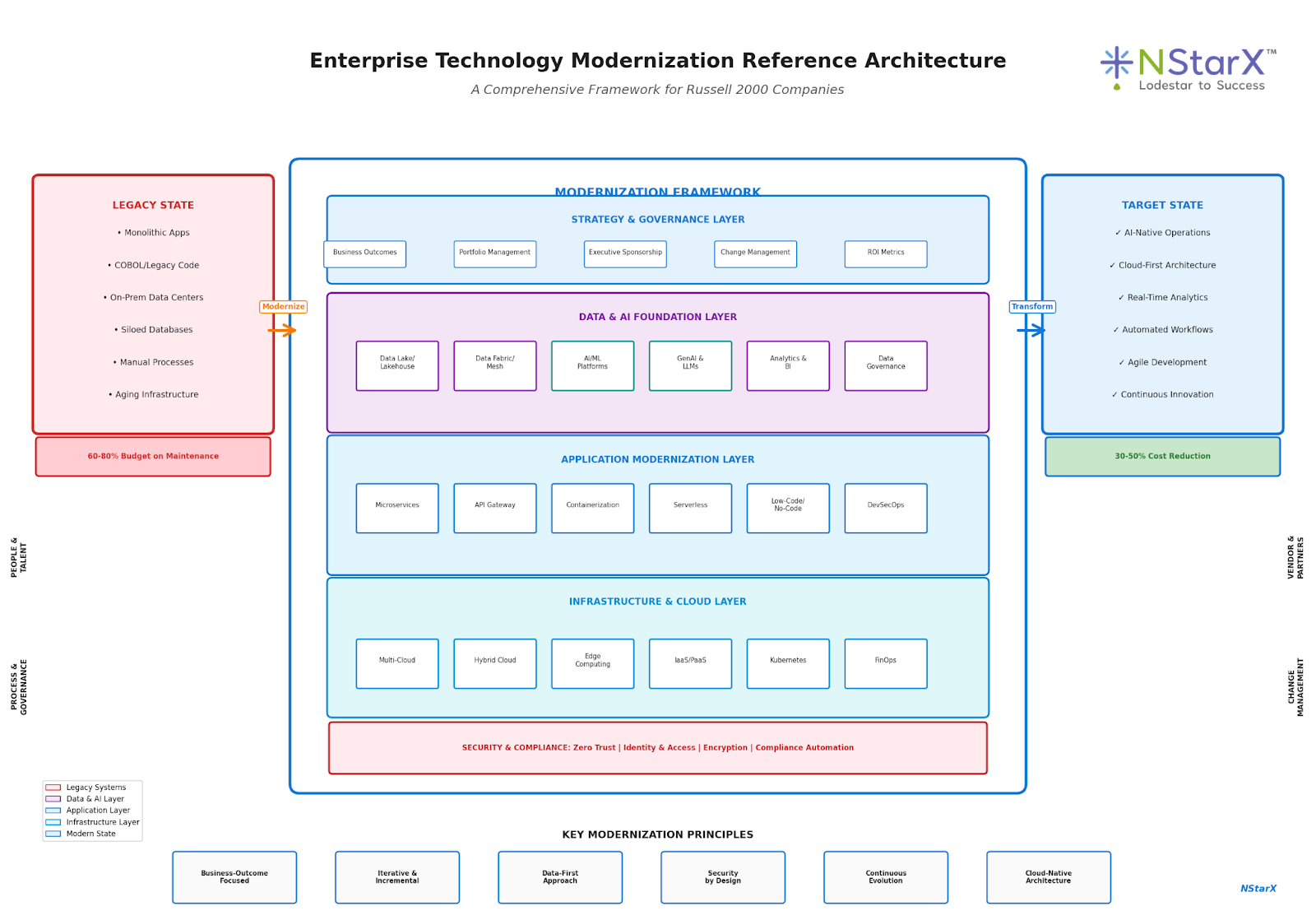
Figure 1 : Tech modernization (NStarX thought process)
Technology modernization is not a single person’s responsibility—it requires coordinated leadership across multiple roles, each bringing unique perspectives and capabilities. Understanding who needs to be at the table and what each leader contributes is essential for successful transformation.
The Chief Information Officer (CIO): Orchestrator and Architect
The CIO’s role has evolved from managing IT operations to orchestrating enterprise-wide technology strategy. In modernization efforts, CIOs serve as the primary architects of technical transformation while ensuring alignment with business objectives.
Modern CIOs must balance multiple imperatives. They’re shifting from incremental IT management to orchestrating human-agent teams, with CIOs becoming AI evangelists. Their responsibilities now include defining technology vision and architecture strategy, assessing and managing technical debt across the enterprise, building and maintaining relationships with technology vendors and partners, and communicating technology value to boards and executive leadership.
A recent MIT Center for Information Systems Research study notes that “the top priority for 2025 is to change your IT operating model to fit your organization’s needs, which have surely changed recently.” The IT operating model is driven by the degree of data integration and process standardization across business units, requiring CIOs to be both technical experts and organizational strategists.
Today’s CIOs are under enormous pressure to ensure the current IT operating model supports future growth and innovation, with 62% of strategy leaders noting an overburdened legacy operating model cannot support current and future strategic objectives.
The Chief Technology Officer (CTO): Innovation and Architecture Lead
While the CIO focuses on enterprise IT strategy and operations, the CTO typically concentrates on product technology, innovation, and emerging capabilities. In modernization initiatives, CTOs lead evaluation and adoption of emerging technologies, define technical standards and best practices, oversee architecture evolution and technical governance, and build partnerships with technology ecosystem players.
The CTO’s focus on innovation makes them critical advocates for modernization, helping the organization understand what’s possible with modern technology and how it can create competitive advantage.
The Chief Data Officer (CDO) or Chief Data and Analytics Officer (CDAO): Data as Strategic Asset
As data becomes central to competitive advantage, CDOs play increasingly critical roles in modernization. They’re responsible for establishing data governance and quality standards, defining data architecture and platform strategy, enabling AI and analytics capabilities, and ensuring compliance with data privacy and security regulations.
According to Gartner, 27% of CDAOs report that their most pressing challenge is a lack of involvement and support from business stakeholders. Successful modernization requires CDOs to be active participants in strategic planning, not just technical specialists.
The Chief Information Security Officer (CISO): Security by Design
Security cannot be bolted on after modernization—it must be embedded from the start. CISOs bring critical perspectives on security architecture and zero-trust implementation, compliance and regulatory requirements, risk assessment and mitigation strategies, and incident response and resilience planning.
With the average cost of a data breach reaching $4.45 million for organizations with legacy systems, and companies losing 3.1% of annual revenue due to failures in digital identity systems, CISOs are essential partners in ensuring modernization reduces rather than increases security risk.
The Chief Financial Officer (CFO): Investment Strategy and Value Realization
CFOs play dual roles in modernization: approving investments and ensuring value realization. Their contributions include evaluating business cases and ROI projections, allocating capital across competing priorities, monitoring costs and benefits throughout transformation, and helping communicate financial impact to boards and investors.
Organizations spend an average of 7.5% of revenue on digital transformation, making CFO engagement essential. The most successful transformations involve CFOs not just as gatekeepers but as active partners in defining how modernization creates financial value.
The Chief Operating Officer (COO): Operational Excellence and Process Transformation
COOs ensure that technology modernization translates into operational improvements. Their focus areas include defining operational metrics and KPIs for modernization, ensuring new capabilities integrate with existing operations, managing change across operational teams, and measuring impact on efficiency, quality, and customer experience.
Since modernization ultimately aims to improve how the business operates, COO engagement ensures technology changes drive real operational improvements rather than just technical novelty.
Business Unit Leaders: Domain Expertise and User Advocacy
Functional leaders from sales, marketing, manufacturing, supply chain, and other domains bring crucial perspectives by defining business requirements and success criteria, identifying opportunities for process improvement, serving as change champions within their organizations, and validating that technical solutions meet business needs.
The most successful modernization efforts involve business leaders not as passive recipients but as active co-creators of solutions.
The Board of Directors: Governance and Strategic Oversight
Board engagement in technology modernization has increased significantly. Board members oversee major technology investments and transformation initiatives, assess cybersecurity risk and resilience, evaluate CIO and technology leadership effectiveness, and ensure technology strategy aligns with business strategy.
However, Gartner reports that 81% of boards have not made progress toward or achieved their digital business transformation goals, suggesting a need for more effective board engagement in overseeing modernization.
The Modernization Leadership Team: Bringing It All Together
The most effective approach is creating a dedicated modernization leadership team that includes representatives from all these roles. This team meets regularly to review progress and resolve issues, makes decisions on priorities and trade-offs, ensures alignment across functional boundaries, and maintains momentum through organizational challenges.
With only 15% of modernization efforts completing on time and budget, organizations need strong, coordinated leadership to beat these odds. This requires leaders who can think strategically about technology, communicate effectively across technical and business audiences, make difficult trade-off decisions, and maintain focus on business outcomes throughout multi-year transformations.
For Russell 2000 companies with more limited leadership resources than Fortune 500 enterprises, creating lean but effective leadership structures is crucial. The key is ensuring the right perspectives are at the table while avoiding leadership overhead that slows decision-making.
5. Learning from Success: How Enterprises Won Through Modernization
Real-world examples of successful technology modernization provide invaluable insights into what works, what doesn’t, and how organizations navigate the complex journey from legacy to modern. These stories demonstrate that modernization is not just possible—it’s achievable with the right strategy, leadership, and execution.
Capital One: The Cloud Banking Pioneer
Capital One’s modernization journey stands as one of the most comprehensive examples in the financial services industry. In 2020, Capital One became the first U.S. bank to go all-in on the cloud, shutting down all eight of its physical data centers and migrating fully to Amazon Web Services (AWS).
This wasn’t a quick decision. Capital One began modernizing in cloud over a decade ago, completing the bulk of its migrations in 2020 and launching a software division focused on cloud and data management solutions in 2022. The transformation was so influential that by 2023, 74% of banks had followed Capital One’s example of adopting cloud-first strategies.
During their Q4 2024 earnings call, Capital One executives touted significant efficiency gains from more than a decade of digital transformation. CEO Richard Fairbank stated, “This has been a journey for which efficiency was never the objective function. It was one of the many benefits of a tech transformation, but it’s very gratifying to see that continue. It’s a great long-term story.”
The modernization enabled Capital One to tap into technology vendors’ innovations that reside in the cloud and take advantage of features and technologies that wouldn’t be available on-premises. The bank’s DevOps transformation achieved faster releases, improved quality, and enhanced security—demonstrating that comprehensive modernization delivers compounding benefits across multiple dimensions.
BBVA: Digital Banking Leadership
The Spanish multinational financial services company BBVA provides another compelling banking modernization example. In 2021, BBVA digitized 94% of its services, earning the slogan “The digital bank of the 21st century.”
BBVA’s digital transformation affected multiple business areas: cost optimizations through automated processes and cloud adoption, customer experience improvements through mobile-first design, people and culture transformation through upskilling and new ways of working, and ESG strategy integration through digital sustainability initiatives.
By 2022, BBVA began thinking like a tech company, embracing Banking-as-a-Service (BaaS) and creating platform capabilities that could serve both their own customers and third-party partners. The transformation became a textbook example, setting a new industry standard and directly addressing the expectations of younger, tech-savvy customers.
CIBC: Compliance as Transformation Catalyst
Canadian Imperial Bank of Commerce (CIBC) took a different approach, using regulatory requirements as a driver for comprehensive modernization. In 2024, CIBC embedded AI ethics, data privacy, and ESG reporting into the core of its transformation agenda.
Rather than seeing compliance regulations as constraints, CIBC viewed them as opportunities to rebuild their technology foundation properly. The bank adopted AI tools to track ESG performance, detect greenwashing, and generate compliant disclosures. Regulations pushed them to modernize technology, manage risk better, and rebuild trust with customers and regulators.
This compliance-driven transformation demonstrates that modernization doesn’t always need to start with competitive pressure—sometimes regulatory requirements provide the impetus and business case for comprehensive change.
Nike: Digital-Physical Integration
Nike’s modernization shows how traditional product companies can transform through technology. The sports footwear giant focused on mobile devices and advanced technologies based on recommendation algorithms and machine learning.
Nike created mobile applications that help choose the best type of shoe based on leg scans, creating maps based on 13 data points. This gave Nike vital information for creating better footwear projects in the future while enhancing customer experience.
The NIKE+ program rewarded active loyalty program members, leading to significant sales increases in Japan where it was implemented. The NIKE SNKRS application saw distinguished shoes record a 100% increase in sales. Nike’s digital transformation proved that innovation could modernize internal company operations while creating new customer engagement channels.
LEGO: Tradition Meets Innovation
LEGO’s modernization journey demonstrates how even the most traditional businesses can embrace digital transformation while maintaining brand authenticity. The Danish toy company’s transformation included entering the video game market with digital versions of physical play, exploring 3D printing options and filing patents for this technology, creating websites collecting customer ideas for new block sets, and combining physical blocks with virtual play through augmented reality.
LEGO equipped blocks with advanced solutions such as sensors and launched projects where physical sets created in virtual play could be photographed to start games. The company used .NET as core technology—a scalable programming framework valued for building serverless applications—demonstrating thoughtful technology choices aligned with business needs.
Daikin Industries: Cloud Cost Optimization
On the manufacturing side, Daikin Industries achieved remarkable results through modernization. Working with technology partners, Daikin developed a custom cloud-based management platform that cut costs by 50%.
The platform gave users greater data visibility while maintaining compliance through strict controls. This wasn’t about moving everything to the cloud for its own sake—it was about building the right cloud-based solution that delivered measurable business value while reducing costs and improving capabilities.
Healthcare RPA Implementation: Operational Excellence
One healthcare company provides a compelling example of targeted modernization delivering immediate value. By implementing robotic process automation (RPA), the organization achieved 85% faster data processing, 92% cost reduction, and minimized risk of human error through automation.
This focused approach demonstrates that modernization doesn’t always require comprehensive transformation—sometimes targeted initiatives in specific areas can deliver outsized returns while building momentum for broader change.
Deloitte Case Studies: Predictive Maintenance
Deloitte case studies confirm the opportunity in manufacturing modernization. Predictive maintenance initiatives cut unplanned downtime by 80%, saving approximately $300,000 per asset. Given that unplanned downtime costs manufacturers up to $260,000 per hour, these savings represent substantial competitive advantage.
Organizations implementing predictive maintenance moved from reactive firefighting to proactive optimization, fundamentally changing how they managed physical assets.
Common Success Factors Across Examples
These diverse success stories share common elements that contributed to their achievements:
Clear Business Objectives: Every successful modernization started with clear business goals, not technology goals. Whether improving customer experience, reducing costs, enabling new products, or meeting regulatory requirements, business outcomes drove technology decisions.
Executive Commitment: Leaders like Capital One’s CEO Richard Fairbank were personally committed to multi-year transformations, providing air cover when initiatives faced challenges and maintaining strategic focus when pressures mounted to slow down or cut back.
Phased Approaches: None of these organizations attempted big-bang transformations. They took incremental approaches that delivered value along the way while building toward comprehensive change.
Cultural Transformation: Technical modernization was accompanied by cultural change—new ways of working, new skills, new mindsets. Organizations that succeeded recognized that technology transformation requires organizational transformation.
Partnership Strategy: Most successful modernizations involved strategic partnerships with technology vendors, system integrators, or consultancies that brought specialized expertise and accelerated progress.
Continuous Learning: Organizations treated modernization as learning journeys, adjusting strategies based on experience and evolving their approaches as they discovered what worked and what didn’t.
For Russell 2000 companies, these examples prove that successful modernization isn’t limited to the largest enterprises with unlimited budgets. Mid-sized organizations can achieve transformational results through strategic focus, phased execution, and commitment to seeing the journey through.
6. Navigating the Obstacles: Challenges and Best Practices in Technology Modernization
Technology modernization, while necessary, is fraught with challenges that can derail even well-planned initiatives. Understanding these obstacles and applying proven best practices significantly increases the likelihood of success. Here’s a comprehensive look at what organizations face and how to overcome it.
Major Challenges in Technology Modernization
Legacy System Complexity and Integration Challenges
Fifty-nine percent of applications in an organization face technical and business fit issues, such as outdated technology, scalability limitations, and inefficient workflows. Legacy systems are not only expensive to maintain but may create security vulnerabilities that are difficult to address. According to McKinsey, technical debt can account for up to 40% of IT budgets, and Gartner reports that 73% of CIOs see legacy systems as a major barrier to digital transformation.
Depending on how long legacy systems have been in place, modernizing and integrating with new technologies can be time-consuming and expensive. Organizations must thoroughly understand all interdependencies for effective data migration and ongoing management.
Best Practice: Conduct comprehensive technical assessments before starting modernization. Map all system dependencies, data flows, and integration points. Create a prioritization framework that addresses the most critical and highest-value integrations first while deferring or finding workarounds for less critical connections.
Budget Constraints and Justifying ROI
Nearly two-thirds of businesses invest more than $2 million annually on maintaining and upgrading legacy systems. Initial migration, data migration, and management efforts can all be challenging. Modernization projects are costly not just due to integrations but also because of upfront investments in hardware, software, networking, and personnel. Even moving from a CapEx to an OpEx model requires justifying ongoing expenses.
The business has high expectations on ROI for technology investments—especially those in AI. C-suite executives often see a lot of funding going to IT and struggle to understand how the broader organization is benefiting from those investments.
Best Practice: Build business cases around specific, measurable business outcomes rather than technical improvements. Use portfolio approaches that include quick wins delivering near-term value alongside longer-term strategic initiatives. Implement stage-gate processes that validate value at key milestones and allow course correction before significant capital is committed.
Talent Shortages and Skills Gaps
The talent shortage in IT continues to challenge organizations, with high demand for skills in AI, cybersecurity, and data analytics. Modern systems require expertise in emerging fields like AI, DevOps, cybersecurity, and cloud-native architectures. The World Economic Forum estimates that 85 million jobs may be displaced by automation by 2025, but 97 million new roles will emerge that require different skill sets.
The legacy skills problem is equally acute. The average COBOL programmer is now 55 years old, with 10% of the workforce retiring annually. Due to most universities dropping COBOL from curricula, estimates suggest that fewer than 2,000 COBOL programmers graduated worldwide in 2024. When key personnel retire, 42% of critical business knowledge is at risk, and for legacy systems this number jumps higher since most legacy applications lack adequate documentation.
Best Practice: Develop comprehensive talent strategies that include upskilling existing employees, strategic hiring for critical gaps, partnerships with managed service providers for specialized expertise, knowledge transfer programs capturing institutional knowledge before retirements, and creating learning cultures that continuously develop capabilities.
Organizational Resistance to Change
Change of any kind in an organization can be tough for some team members to handle, but this gets even more complicated when employees worry that technological changes will result in job loss or major disruptions to their routines. Organizational change management is often harder than the technology solution itself, as even well-designed systems fail if people are unwilling to adopt them.
Half of all IT professionals cite “the current system still works” as their primary blocker to modernization. This resistance stems from rational concerns—the known problems of legacy systems feel safer than the unknown risks of new technology.
Best Practice: Make employees part of the modernization process from the beginning. Publish technology roadmaps so people understand what’s coming and why. Host interactive Q&A sessions to address concerns openly. Build feedback mechanisms allowing employees to voice concerns and influence approaches. Identify and empower change champions who can advocate for modernization within their teams. Provide training programs with hands-on exercises that build confidence with new technologies.
Security and Compliance Risks
If not done properly, modernizing systems can leave businesses open to vulnerabilities. The average cost of a data breach in organizations with legacy systems is $4.45 million, but poor modernization can actually increase exposure during transition periods. Organizations must have solid security practices in place to decrease the risk of data breaches and ensure regulatory compliance throughout transformation.
With breach costs 13% higher for legacy systems and companies losing 3.1% of annual revenue due to failures in digital identity systems, security cannot be an afterthought in modernization.
Best Practice: Implement security by design from the start. Engage CISOs and security teams early in planning. Conduct comprehensive security and compliance assessments before, during, and after transitions. Implement zero-trust architectures as part of modernization. Use modernization as an opportunity to improve security posture rather than just maintaining existing levels. Ensure compliance with evolving regulations is built into new systems from inception.
Measuring and Demonstrating Value
One of the greatest challenges is being able to clearly articulate and measure the value of modernization solutions. How are you driving more revenue? How are you lowering costs? According to Gartner, 81% of boards have not made progress toward or achieved their digital business transformation goals, with many CIOs struggling to justify technology investments.
The challenge intensifies as organizations seek to assess AI and emerging technologies where traditional ROI metrics may not fully capture value. There’s a knowledge gap that needs to be addressed in measuring the business value of new technologies.
Best Practice: Establish clear metrics before starting modernization initiatives. Go beyond IT metrics to measure business outcomes such as revenue growth, customer satisfaction, operational efficiency, time to market, and employee productivity. Implement continuous monitoring and reporting that keeps stakeholders informed of progress against goals. Be willing to adjust or terminate initiatives that aren’t delivering expected value. Publish KPI deltas, cost curves, and lessons learned. If ROI is clear, double the budget for the next phase. If not, stop the effort and redirect talent and resources.
Proven Best Practices for Successful Modernization
1. Start with Strategy, Not Technology
Technology modernization without purposeful application produces novelty at best. The most successful organizations recognize the importance of taking time to listen and understand where problem experiences and challenges exist. They target modernization efforts at these unmet needs, which often leads to not only the best but the simplest modernization solutions.
2. Adopt Agile and Iterative Approaches
Although legacy tech can be monolithic, there’s no reason that the approach to modernization should be clunky all-or-nothing propositions. Use agile principles for quick wins and incremental advancements whenever possible. Look for “small stories” and implement continuous integration and continuous delivery (CI/CD) to add velocity to modernization work.
Organizations that take incremental approaches delivering value along the way are far more likely to succeed than those attempting big-bang transformations.
3. Prioritize Based on Value and Dependencies
Score modernization needs based on the value the project will deliver to the business, as well as how each modernization project could accelerate other modernization initiatives. There’s a multiplier effect at work—a modernization project that eliminates interdependencies and unwinds complexities in one area makes other areas much easier and quicker to modernize.
4. Build Strong Data Foundations First
A gen AI solution is only as good as the data one curates. A proof of concept can only go into production if the foundations can scale. Organizations must prioritize data architecture, data management, and data insights as foundations for all other modernization work.
Gartner expects that through 2026, organizations that don’t enable AI-ready data practices will see over 60% of AI projects fail to deliver on business SLAs and be abandoned.
5. Partner Strategically
Organizations that outsource 50% of their customer-facing product overhauls are 52% more likely to have an “extremely positive” experience compared to those that keep most work in-house. The right digital product engineering services partner brings expertise to fill skill gaps, modernize technologies, and deliver innovation aligned with goals.
Two-thirds of organizations report significant challenges related to IT staffing. Augmenting in-house teams with managed service providers (MSPs) brings industry experts who share best practices tailored to the organization’s unique environment.
6. Focus on Continuous Modernization
Motion is not always progress. The most successful businesses are those that commit to continuous evolution—adapting, improving, and growing as new technologies and challenges emerge. Rather than treating modernization as discrete projects, embed modernization into how the organization operates through DevSecOps, continuous architecture review, and technical debt governance.
7. Communicate Transparently and Frequently
Keep stakeholders informed throughout the journey. Acknowledge challenges and setbacks while celebrating successes. Transparent communication accelerates buy-in and ensures leaders are funding only what works.
For Russell 2000 companies, applying these best practices while understanding and preparing for common challenges dramatically improves the odds of successful modernization. With only 15% of transformations completing on time and budget, organizations that learn from others’ experiences and apply proven approaches gain significant competitive advantage.
7. The Future of Technology Modernization: Navigating Tomorrow’s Landscape
The pace of technological change shows no signs of slowing. For enterprise leaders planning modernization strategies, understanding emerging trends and preparing for future shifts is as important as addressing today’s legacy challenges. Here’s what the future of technology modernization looks like in our rapidly evolving landscape.
The AI-Native Enterprise: From Tool to Foundation
The next wave of modernization will center on becoming AI-native organizations where artificial intelligence isn’t bolted onto existing processes but fundamentally embedded in how businesses operate. According to Deloitte, 92% of CIOs anticipate AI will be integrated into their organizations by 2025, driven by increasing pressure from CEOs and boards.
However, this integration will evolve significantly. Agentic AI—systems that can autonomously execute complex workflows—will move from pilot to production at scale. These AI agents will cover everything from claims routing in insurance to adaptive scheduling in factories, often delivering double-digit productivity gains within the first six months. GenAI work-instruction bots and predictive-maintenance digital twins will shift from pilot cells to plant-wide rollouts in manufacturing.
But challenges remain. Gartner predicts that over 40% of agentic AI projects will be canceled by the end of 2027, highlighting that success requires more than just implementing technology. Organizations must develop comprehensive AI strategies that address governance, ethics, data quality, and integration with existing processes.
The future belongs to organizations that can move from asking “What can we do with AI?” to “What should we do with AI?”—applying strategic discipline to AI adoption rather than pursuing technology for its own sake.
Hybrid and Multi-Cloud as Strategic Imperative
The cloud conversation is shifting from “should we migrate?” to “how do we optimize across hybrid and multi-cloud environments?” Organizations are discovering that cloud-first doesn’t mean cloud-only. They’re shifting to strategic hybrid approaches: cloud for elasticity, on-premises for consistency, and edge for immediacy.
Crackdowns in data compliance regulations make hybrid and multi-cloud deployments much more attractive for enterprises, especially those in highly regulated industries. Organizations will need to develop sophisticated cloud management capabilities that optimize costs, performance, security, and compliance across diverse environments.
Gartner forecasts that worldwide cloud spending will continue growing, but the focus will shift from migration to optimization. Organizations will implement FinOps practices that treat cloud as a variable cost to be actively managed rather than a fixed infrastructure expense.
Platform Engineering and Developer Experience
The future of modernization includes fundamental changes in how organizations build and deploy software. Platform engineering—creating internal platforms that abstract complexity and accelerate development—will become standard practice. These platforms will provide developers with self-service capabilities, standardized tools, and automated workflows that dramatically reduce the friction in moving from idea to production.
Gartner predicts that by 2028, 75% of enterprise software engineers will use AI coding assistants, a massive shift from under 10% in early 2023. These tools will augment human developers, handling routine tasks and enabling humans to focus on creative problem-solving and business logic.
The Stripe Developer Coefficient Report revealed that developers waste 33% of their time on technical debt. Future modernization will focus on eliminating this waste through better tools, platforms, and practices.
Quantum Computing and Next-Generation Technologies
While still emerging, quantum computing will begin impacting certain industries and use cases. Financial services firms will explore quantum algorithms for portfolio optimization and risk analysis. Pharmaceutical companies will use quantum simulation for drug discovery. Logistics companies will leverage quantum computing for complex optimization problems.
Most enterprises won’t operate quantum computers directly, but they’ll access quantum capabilities through cloud services. Preparing for this future means understanding which problems are quantum-suitable and building architectures that can integrate quantum and classical computing.
Sustainability as Technology Imperative
Sustainable technology will move from nice-to-have to business-critical. The energy required to power AI development and use, the environmental impact of IoT and Industrial IoT, and the growing number of edge devices will all demand attention to environmental sustainability.
Organizations will be pushed to select solutions that help drive sustainability within their industries, like cloud services and AI-powered solutions that optimize energy use. Sustainability reporting will become mandatory in many regions, with organizations adopting AI tools to track ESG performance and generate compliant disclosures.
For technology leaders, sustainability will influence every modernization decision: data center locations and power sources, hardware refresh cycles and e-waste management, software efficiency and resource consumption, and supply chain and vendor sustainability practices.
Zero Trust Security as Default Architecture
Security architectures will continue evolving from perimeter-based to zero-trust models where every access request is verified regardless of origin. As organizations embrace hybrid work, multi-cloud, and edge computing, traditional security models based on trusted internal networks become obsolete.
Future modernization will embed zero-trust principles from the start: continuous verification of user and device identity, least-privilege access that grants minimum necessary permissions, micro-segmentation that limits lateral movement in breaches, and continuous monitoring and adaptive responses to threats.
With breach costs averaging $4.45 million for organizations with legacy systems and rising cyber threats including AI-enabled phishing and advanced attack vectors, security cannot be an afterthought in modernization.
The Democratization of Technology
Low-code and no-code platforms will continue expanding capabilities. Gartner predicts that 70% of applications will be created through low-code or no-code development by 2025. This democratization means business users will create more applications themselves, reducing developer bottlenecks and accelerating innovation.
However, this trend requires governance to ensure security, quality, and integration with enterprise systems. Organizations will need to balance empowerment with control, creating citizen development programs with appropriate guardrails.
Similarly, AI capabilities will be democratized, with 83% of tech leaders having programs empowering business users to create AI-powered applications. This shift from AI as specialized expertise to AI as general capability will fundamentally change how organizations innovate.
Continuous Reinvention as Operating Model
Perhaps the most fundamental shift is moving from discrete transformation initiatives to continuous reinvention as the default operating model. Success will require bold reimagination: modular architectures, embedded governance, and perpetual evolution as core capabilities.
Organizations will establish architecture practices that continuously assess technology fitness, implement DevSecOps that builds modernization into daily work, create technical debt governance making debt visible and manageable, and develop continuous learning programs keeping teams current with emerging technologies.
Digital transformation will never be “finished.” The most successful businesses will be those that commit to continuous evolution—adapting, improving, and growing as new technologies and challenges emerge.
Preparing for the Unknown
The only certainty about the future is that it will include technologies and challenges we haven’t yet imagined. Organizations that build for adaptability rather than specific endpoints will be best positioned for whatever comes next.
This means investing in fundamentals like data quality, security, and modern architecture, building organizational capabilities like continuous learning and change management, maintaining strategic partnerships with technology ecosystem leaders, and cultivating cultures that embrace rather than resist change.
For Russell 2000 companies, the future offers both challenge and opportunity. Organizations that begin modernization journeys now, building adaptive technology foundations and organizational capabilities, will be positioned to capitalize on emerging technologies and business models. Those that delay modernization, hoping current systems can carry them forward, will find the gap between their capabilities and market requirements growing ever wider.
8. Conclusion: The Imperative of Now
Technology stack modernization for Russell 2000 companies isn’t a discretionary initiative to be pursued when budgets allow or market conditions improve. It’s an existential imperative that determines whether mid-sized enterprises can compete, grow, and thrive in an increasingly digital economy.
The evidence is overwhelming: enterprises lose $370 million annually due to legacy system inefficiencies. Organizations spend 60–80% of IT budgets on maintenance rather than innovation. The cost of poor software quality in the United States has grown to $2.41 trillion. For Russell 2000 companies operating on smaller margins than Fortune 500 giants, these costs are unsustainable.
But modernization isn’t just about avoiding costs—it’s about capturing opportunities. Capital One’s decade-long cloud transformation enabled efficiency gains that continue compounding. BBVA’s digitization of 94% of services positioned them as “the digital bank of the 21st century.” Organizations implementing predictive maintenance cut unplanned downtime by 80%, saving $300,000 per asset. Companies with modern systems generate significantly more revenue growth than those constrained by legacy infrastructure.
The path forward requires leadership across the enterprise, not just in IT. CIOs must orchestrate technical transformation while communicating business value to boards. CFOs must treat modernization as strategic investment rather than discretionary spending. Business unit leaders must actively participate in defining requirements and validating solutions. Boards must provide governance and strategic oversight that ensures transformation delivers on promised business outcomes.
Success demands balanced approaches: quick wins demonstrating immediate value alongside longer-term strategic transformation, build-buy-partner decisions that leverage organizational strengths while accessing external expertise, and continuous evolution that embeds modernization into how organizations operate rather than treating it as discrete projects.
The challenges are real: legacy system complexity, budget constraints, talent shortages, organizational resistance, security risks, and difficulty measuring ROI. But these obstacles can be overcome through strategic planning, phased execution, strong change management, and commitment to see the journey through.
Looking forward, the technology landscape will only accelerate. AI will move from pilot to production at scale. Hybrid and multi-cloud will become strategic imperatives. Platform engineering and developer experience will transform how software is built. Sustainability will influence every technology decision. Zero trust security will become the default architecture.
Organizations that begin modernization now, building adaptive foundations and organizational capabilities, will be positioned to capitalize on these emerging trends. Those that delay, hoping to preserve investments in aging systems, will find themselves increasingly unable to compete with more agile, digitally native competitors.
For Russell 2000 companies, the message is clear: the cost of maintaining legacy systems is measurable and growing. The benefits of modernization are proven and compelling. The future belongs to those who embrace continuous evolution rather than clinging to the past.
The question isn’t whether to modernize—it’s how quickly you can start and how strategically you can execute. In a rapidly evolving technology landscape, standing still is the riskiest strategy of all.
The imperative is now. The path is clear. The time for legacy excuses has passed.
9. References
- Pragmatic Coders. (2025). “2025 Legacy Code Stats: Costs, Risks & Modernization.” Retrieved from https://www.pragmaticcoders.com/resources/legacy-code-stats
- Profound Logic. (2025). “The True Cost of Maintaining Legacy Applications: An Industry Analysis.” Retrieved from https://www.profoundlogic.com/true-cost-maintaining-legacy-applications-industry-analysis/
- Adalo. (2024). “40 Legacy Software Migration Trends for Enterprises in 2025.” Retrieved from https://www.adalo.com/posts/cost-savings-from-replacing-legacy-tools-with-no-code-stats
- Strategy Software. (2025). “Why Legacy Systems Are Costing You More Than You Think.” Retrieved from https://www.strategysoftware.com/blog/why-legacy-systems-are-costing-you-more-than-you-think
- PYMNTS.com. (2025). “Legacy Identity Systems Push Billions Out the Back Door.” Retrieved from https://www.pymnts.com/consumer-insights/2025/legacy-identity-systems-push-billions-out-the-back-door
- Digitalisation World. (2025). “The costs of legacy systems, $370 million lost annually.” Retrieved from https://m.digitalisationworld.com/news/71007/the-costs-of-legacy-systems-370-million-lost-annually
- CIO Dive. (2024). “Legacy tech upgrades cost the average business nearly $3M last year.” Retrieved from https://www.ciodive.com/news/legacy-technology-technical-debt-costs-enterprise-data-AI/721885/
- IT Convergence. (2025). “Cost of Maintaining Legacy Systems vs Fully Supported System.” Retrieved from https://www.itconvergence.com/blog/cost-of-maintaining-legacy-systems-vs-one-fully-supported
- Hyland. (2025). “The Cost Of Maintaining Legacy Systems.” Retrieved from https://www.hyland.com/en/resources/articles/maintaining-legacy-systems
- Saritasa. (2025). “Legacy Software Modernization in 2025: Survey of 500+ U.S. IT Pros.” Retrieved from https://www.saritasa.com/insights/legacy-software-modernization-in-2025-survey-of-500-u-s-it-pros
- Deloitte Insights. (2025). “Tech Trends 2026.” Retrieved from https://www.deloitte.com/us/en/insights/topics/technology-management/tech-trends.html
- CBTS. (2024). “2024 IT modernization trends.” Retrieved from https://www.cbts.com/blog/2024-it-modernization-trends/
- TierPoint. (2024). “The Ultimate Guide to IT Modernization in 2025.” Retrieved from https://www.tierpoint.com/blog/cloud/it-modernization-guide/
- Stride. (2025). “Top 10 AI-Driven Legacy Modernization Platforms of 2025.” Retrieved from https://www.stride.build/thought-leadership/top-10-ai-driven-legacy-modernization-platforms-of-2025
- Brainhub. (2024). “6 Successful Digital Transformation Examples [2025].” Retrieved from https://brainhub.eu/library/digital-transformation-examples
- Net Solutions. (2025). “Top 13 App Modernization Trends To Consider in 2024.” Retrieved from https://www.netsolutions.com/hub/application-modernization/trends/
- The Future of Commerce. (2025). “Top 5 high-tech trends for 2025: Embracing growth and transformation.” Retrieved from https://www.the-future-of-commerce.com/2024/11/13/high-tech-trends-2025/
- Hexaware. (2025). “Top 13 Data Modernization Services Providers.” Retrieved from https://hexaware.com/blogs/top-13-data-modernization-services-providers-aligning-ai-to-business-outcomes/
- Access IT Automation. (2024). “2024 Enterprise Technology and IT Modernisation Trends.” Retrieved from https://accessitautomation.com/2024-enterprise-technology-and-it-modernisation-trends/
- Naviant. (2023). “The Top 10 Technology Trends in 2024 Every Business Needs to Know About.” Retrieved from https://naviant.com/blog/2024-tech-trends/
- CIO Dive. (2025). “Capital One touts efficiency gains from long-haul IT makeover.” Retrieved from https://www.ciodive.com/news/capital-one-tech-modernization-discover-card-integration/738009/
- Coherent Solutions. (2025). “Top Digital Transformation Trends 2025: Overview by Industries.” Retrieved from https://www.coherentsolutions.com/insights/top-digital-transformation-trends
- Deloitte Insights. (2024). “Tech investment shifts in 2024.” Retrieved from https://www.deloitte.com/us/en/insights/topics/digital-transformation/where-are-organizations-getting-the-most-roi-from-tech-investments.html
- Workboard. (2025). “Digital Banking Trends from 2020 to 2025.” Retrieved from https://www.workboard.com/blog/digital-banking-trends.php
- Deloitte Insights. (2025). “Tech industry growth 2024.” Retrieved from https://www.deloitte.com/us/en/insights/industry/technology/executives-expect-tech-industry-growth-in-2024.html
- Talent500. (2024). “Capital One DevOps Case Study: Transforming Banking with Tech Innovation.” Retrieved from https://talent500.com/blog/capital-one-devops-case-study/
- CIO. (2025). “10 top priorities for CIOs in 2025.” Retrieved from https://www.cio.com/article/3801023/10-top-priorities-for-cios-in-2025.html
- Iron Bow. (2025). “How Can Government Solve Its Biggest Tech Challenges in 2025?” Retrieved from https://ironbow.com/techsource/government-tech-challenges-2025
- KPMG. (2025). “Solving Tech’s Toughest Challenges.” Retrieved from https://kpmg.com/us/en/articles/2025/how-to-solve-tough-technology-challenges.html
- TechTarget. (2025). “Top 7 CIO challenges in 2025 and how to handle them.” Retrieved from https://www.techtarget.com/searchcio/tip/Top-7-CIO-challenges-and-how-to-handle-them
- CIO. (2025). “8 strategies for accelerating IT modernization.” Retrieved from https://www.cio.com/article/2066653/8-strategies-for-accelerating-it-modernization.html
- Quixy. (2025). “Conquering IT Modernization Challenges: Setting Sail for Success in 2026.” Retrieved from https://quixy.com/blog/it-modernization-challenges/
- CIO.inc. (2024). “2025 and Beyond: CIOs’ Guide to Stay Ahead of Challenges.” Retrieved from https://www.cio.inc/2025-beyond-cios-guide-to-stay-ahead-challenges-a-26558
- Gartner. (2025). “The Top CIO Challenges.” Retrieved from https://www.gartner.com/en/articles/cio-challenges
- CIO. (2025). “9 IT resolutions for 2025.” Retrieved from https://www.cio.com/article/3629833/9-it-resolutions-for-2025.html
- LSEG. (2024). “2024 Russell US Indexes reconstitution: summary.” Retrieved from https://www.lseg.com/content/dam/ftse-russell/en_us/documents/other/2024-russell-recon-recap-final.pdf
- Russell Reconstitution. (2025). “Russell Reconstitution.” Retrieved from https://www.lseg.com/en/ftse-russell/russell-reconstitution